
Zakat
Zakat vs Sadaqah: Understanding the Difference in Islam
Oct
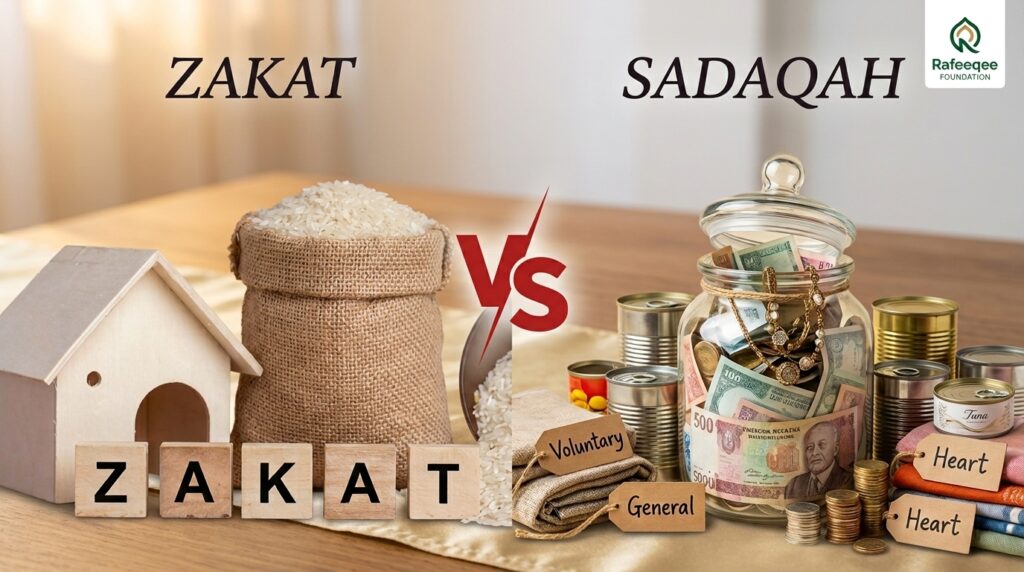
When it comes to giving in Islam, two important terms often come up: Zakat and Sadaqah. Both encourage Muslims to support people in need, ease hardship and use their wealth in ways that please Allah. However, they are not exactly the same. While Zakat is an obligatory act of worship for eligible Muslims who meet specific conditions, Sadaqah is voluntary charity that allows Muslims to give according to their means and opportunities.
Understanding the difference between Zakat and Sadaqah can help you make more informed decisions about charitable giving. It also reminds us that helping others is not limited to giving large sums of money. Whether you contribute towards food, education, clean water or medical assistance, your generosity can make a meaningful difference in someone’s life.
What Is Zakat in Islam?
Zakat is one of the Five Pillars of Islam and an obligatory form of charity for Muslims whose qualifying wealth meets the prescribed conditions. The word is associated with purification and growth, reflecting how Zakat helps purify wealth while supporting people who are entitled to receive it.
For eligible Muslims, Zakat is more than an act of kindness. It is a religious responsibility that recognises the rights of those in need within the wealth Allah has provided. For many common forms of qualifying savings and assets, Zakat is calculated at 2.5%, provided the relevant conditions are met. However, the calculation can differ for agricultural produce, livestock and other categories of wealth.
The Qur’an repeatedly connects prayer with Zakat, emphasising its importance in a Muslim’s life. In Surah Al-Baqarah, Allah says:
“And establish prayer and give zakah and bow with those who bow [in worship and obedience].”
Qur’an 2:43 — Qur’an
This verse highlights Zakat as an important part of Islamic worship. It teaches Muslims that faith is reflected not only in their relationship with Allah but also in fulfilling their responsibilities towards others.
What Is Sadaqah in Islam?
Sadaqah is voluntary charity given sincerely for the sake of Allah. Unlike obligatory Zakat, it is not restricted to a fixed annual payment or a particular percentage of wealth. Muslims can give Sadaqah whenever they have the means, whether through money, food, clothing, useful resources or other acts of kindness.
Sadaqah also goes beyond financial donations. Helping someone carry a burden, offering a kind word, sharing beneficial knowledge or assisting a person facing difficulty can all be forms of charity. This makes Sadaqah an opportunity to practise generosity in everyday life, regardless of how much money someone has.
The Qur’an encourages giving without turning charity into a source of embarrassment or harm for the recipient. In Surah Al-Baqarah, Allah says:
“Kind speech and forgiveness are better than charity followed by injury.”
Qur’an 2:263
This verse reminds us that the manner in which we give matters. True charity should protect people’s dignity, not make them feel inferior. Whether someone gives a little or a lot, sincerity, kindness and respect should remain at the heart of the act.
Zakat vs Sadaqah: What Is the Difference?
Although Zakat and Sadaqah both involve giving to others, their requirements and purposes differ. Zakat is an obligation for eligible Muslims, while Sadaqah is voluntary and can be given throughout the year. Understanding this distinction helps Muslims fulfil their religious responsibilities while finding additional ways to support vulnerable people.
| Feature | Zakat | Sadaqah |
|---|---|---|
| Nature | Obligatory for eligible Muslims | Voluntary |
| Amount | Usually 2.5% for qualifying wealth, subject to specific conditions | No fixed amount |
| Timing | When the relevant conditions are met | Any time |
| Recipients | Specific categories outlined in Islamic teachings | Can support a wider range of charitable needs |
| Forms | Qualifying wealth and assets | Money, food, clothing, assistance and acts of kindness |
One important distinction is that Zakat must be distributed to eligible recipients, as outlined in the Qur’an. Allah identifies these categories in Surah At-Tawbah:
“Zakah expenditures are only for the poor and for the needy…”
Qur’an 9:60 — Read the full verse.
Translation
Sadaqah offers greater flexibility, allowing Muslims to respond to different needs, from helping a struggling family purchase food to supporting education, healthcare or access to clean water.
Why Are Zakat and Sadaqah Important?
Both forms of giving help strengthen compassion and remind Muslims that wealth comes with responsibilities. A donation can help a family meet basic needs, give a child access to school supplies or provide assistance to someone facing a difficult period in life. These acts may seem small to the giver, but they can bring meaningful relief to someone who has very little.
The Qur’an beautifully illustrates the reward of generosity in Surah Al-Baqarah:
“The example of those who spend their wealth in the way of Allah is like a seed [of grain] which grows seven spikes; in each spike is a hundred grains.”
Qur’an 2:261 — Read the full verse.
Translation+1
This verse encourages believers to give sincerely, trusting in Allah’s promise of reward. It also reminds us that the value of charity is not measured by the amount given alone. What matters is the intention behind the giving and the good it seeks to accomplish.
How Can You Practise Zakat and Sadaqah?
Start by determining whether you are eligible to pay Zakat and calculating your obligation correctly. If you are unsure about your assets, deductions or eligibility, consult a knowledgeable Islamic scholar or a reliable Zakat adviser. Keep Zakat funds separate from voluntary donations so that your obligatory payment can be distributed appropriately.
You can practise Sadaqah by helping a neighbour, providing food for a family in need, contributing towards a child’s education or supporting a charitable initiative. You do not need to wait until you have a large amount to give. Even regular, modest contributions can help sustain meaningful support for vulnerable communities.
When choosing a charity, consider how it identifies beneficiaries, manages donations and delivers assistance. Giving through a trustworthy organisation can help direct resources towards people who need them most.
Support Vulnerable Communities Through Rafeeqee Foundation
At Rafeeqee Foundation, charitable giving is put into action through initiatives that support vulnerable individuals and families. Its work includes educational assistance, food support, medical outreach and other charitable activities designed to meet community needs.
Your Sadaqah can help contribute to these efforts and support initiatives that bring practical relief to people facing hardship. If you would like to make a difference, consider donating to Rafeeqee Foundation and learning more about its charitable work.
Before donating Zakat, please confirm directly with the foundation that your contribution can be accepted and distributed as Zakat in accordance with Islamic requirements.
Conclusion
Zakat and Sadaqah share a common purpose: encouraging generosity and supporting those in need. However, Zakat fulfils a specific religious obligation, while Sadaqah gives Muslims additional opportunities to help others throughout their lives.
Both remind us that charity is not simply about giving away wealth. It is about recognising the struggles of others, preserving their dignity and contributing to a more compassionate society. Whether through fulfilling your Zakat obligation or giving Sadaqah, every sincere effort to help others can be meaningful.