
Community
Qurbani in Islam: The Meaning Behind Giving During Eid
Oct
What Is Qurbani in Islam?
Qurbani, also known as Udhiya, is the act of sacrificing an eligible animal during Eid al-Adha as an act of worship and obedience to Allah. It commemorates the remarkable faith and submission of Prophet Ibrahim (AS), who was prepared to obey Allah’s command even when it meant sacrificing his beloved son. Allah provided a ram as a sacrifice instead, making this event a lasting lesson in faith, trust and devotion.
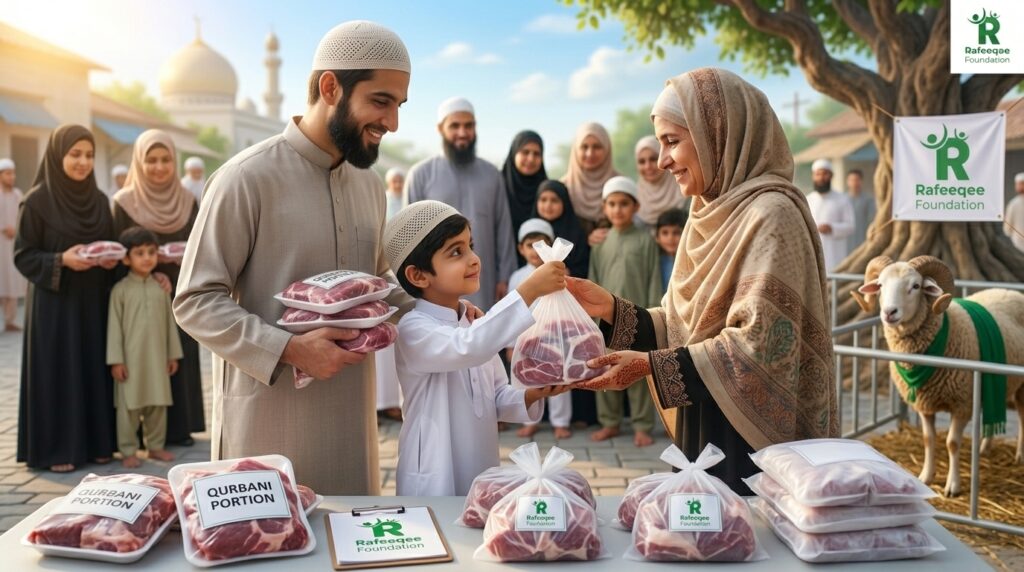
However, Qurbani is not simply about slaughtering an animal. It is also an opportunity to express gratitude for Allah’s blessings and share with people who may not regularly have access to meat. By distributing the meat among family, friends and those in need, Muslims turn an act of worship into an opportunity to spread happiness and strengthen community bonds.
The Story Behind Qurbani: Lessons from Prophet Ibrahim (AS)
The story of Qurbani reminds Muslims of Prophet Ibrahim’s (AS) willingness to submit completely to Allah. When he received the command in his dream to sacrifice his son, Prophet Ismail (AS), both father and son demonstrated extraordinary submission to Allah’s will. Before the sacrifice could take place, Allah intervened and provided a ram instead.
This powerful event teaches us that sincere faith involves trusting Allah, even when obedience requires sacrifice. Although most of us will never face a test like that of Prophet Ibrahim (AS), we can apply its lessons by giving generously, putting our faith into practice and helping others even when doing so requires personal effort.
What the Qur’an Teaches Us About Qurbani
The Qur’an explains that the true value of Qurbani lies in the sincerity and righteousness behind it, rather than the animal itself.
Allah says in Surah Al-Hajj:
“Their meat will not reach Allah, nor will their blood, but what reaches Him is piety from you.”
Qur’an 22:37 — Sahih International translation.
This verse highlights an essential lesson: Allah does not need our sacrifices. What matters is our taqwa (God-consciousness), sincerity and willingness to obey Him.
The Qur’an also encourages Muslims to share the benefits of sacrifice with others. In Surah Al-Hajj, verse 36, Allah instructs believers to eat from the sacrificial animals and feed those who are in need.
Qurbani therefore brings together two important aspects of Islam: worshipping Allah and showing compassion towards His creation.
Why Qurbani Is About More Than Sacrifice
Sharing with Those in Need
Imagine celebrating Eid with your family while knowing that a family nearby cannot afford a special meal. For many people experiencing financial hardship, occasions like Eid can be difficult reminders of what they lack.
Qurbani offers an opportunity to make that day more joyful. When the meat is distributed thoughtfully, more families can participate in the celebration without worrying about the cost of purchasing meat. A simple share can help someone feel included, remembered and cared for.
This is one of the beautiful lessons of Eid al-Adha: our celebrations become more meaningful when we remember people beyond our immediate families.
Strengthening Faith and Gratitude
Qurbani also encourages Muslims to reflect on the blessings they sometimes take for granted. Food, family, financial stability and the ability to give are all blessings from Allah.
Giving with sincerity helps nurture gratitude and reminds us that wealth is not merely something to accumulate; it can also be a means of serving others. Whether through Qurbani or other forms of charity, Muslims have opportunities to translate their faith into practical kindness.
How Qurbani Brings Communities Together
Eid al-Adha is a celebration shared by Muslims across different backgrounds and communities. While traditions may vary, the values of worship, generosity and togetherness remain central to the occasion.
Qurbani can help bridge the gap between people with different financial circumstances. When families experiencing hardship receive their share, they can enjoy the occasion with greater comfort. The act also encourages neighbours to look out for one another and reminds communities that compassion should extend beyond festive periods.
This spirit of giving is especially important in communities where many households struggle to meet their everyday needs. A thoughtful act of generosity can make Eid more memorable while strengthening the bonds that hold a community together.
How Rafeeqee Foundation Supports Qurbani and Giving
The values behind Qurbani are closely connected to the work of charitable organisations that help vulnerable people celebrate important occasions with dignity.
Rafeeqee Foundation supports this spirit of generosity through its Qurbani donation programme. The foundation receives donations equivalent to the cost of Udhiya, arranges the sacrifice on behalf of donors and distributes the benefit to people in need.
This provides an opportunity for Muslims who wish to fulfil their Qurbani through an organised charitable initiative to help reach people who may otherwise struggle to enjoy the occasion.
Beyond Qurbani, Rafeeqee Foundation’s charitable activities include Ramadan food distribution, Zakatul Maal support, clean-water projects, school supplies for children, and care for orphans and older people.
These efforts reflect a broader principle of Islamic giving: caring for others should not be limited to one celebration or one season. From providing food to supporting education and essential needs, consistent generosity can help improve lives in practical ways.
To learn more about its programmes or explore how to contribute, visit the Rafeeqee Foundation website.
How You Can Make Your Qurbani Meaningful
Making Qurbani meaningful begins with sincerity and understanding the purpose behind the act. Learn the relevant Islamic guidelines, including the eligibility of the animal and the prescribed timing of the sacrifice. If you are arranging Qurbani through a charitable organisation, confirm how the sacrifice and distribution are handled.
It is also important to remember that generosity can extend beyond the meat distributed during Eid. You can support a struggling family, contribute towards food relief, assist children with school supplies or help fund other essential community projects. These acts do not replace Qurbani when it is due, but they allow you to continue practising compassion throughout the year.
Above all, give with the intention of seeking Allah’s pleasure rather than recognition. The amount you give may differ from someone else’s, but sincerity, responsibility and consideration for those in need remain important.
Conclusion
Qurbani in Islam is a reminder of faith, obedience and the responsibility to care for others. Through the example of Prophet Ibrahim (AS), Muslims learn the importance of trusting Allah and placing sincere devotion above worldly attachments.
The Qur’an reminds us that what reaches Allah is our piety, while the benefits of our giving can reach people who need support. As we celebrate Eid al-Adha, let us remember that its joy becomes even more meaningful when we share our blessings with others.
Through initiatives such as Rafeeqee Foundation’s Qurbani programme, Muslims can help extend that spirit of generosity to vulnerable families. May Allah accept our sacrifices, purify our intentions and make us a source of goodness for others. Ameen.
Frequently Asked Questions About Qurbani
1. What is the main purpose of Qurbani in Islam?
Qurbani is an act of worship that demonstrates obedience to Allah and commemorates the devotion of Prophet Ibrahim (AS). It also provides an opportunity to share food with people in need.
2. Which Qur’anic verse explains the meaning of Qurbani?
Surah Al-Hajj 22:37 explains that the meat and blood of the sacrifice do not reach Allah; rather, it is the believers’ piety that matters.
3. Who should receive Qurbani meat?
Qurbani meat may be shared with family, friends, neighbours and people in need, according to Islamic guidance. Giving to those experiencing hardship helps them participate in the Eid celebration.
4. Can I arrange my Qurbani through Rafeeqee Foundation?
Yes. Rafeeqee Foundation’s website describes a Qurbani donation programme through which donations equivalent to the cost of Udhiya are used to arrange the sacrifice and distribute its benefit to people in need. You can also donate to that cause through our website.
5. Is giving charity outside Eid al-Adha also important?
Yes. Islam encourages generosity throughout the year. Supporting food relief, education, clean-water projects and vulnerable families are among the ways Muslims can continue helping others beyond Eid.