
Uncategorized
The Rights of Children Over Their Parents in Islam
Jul
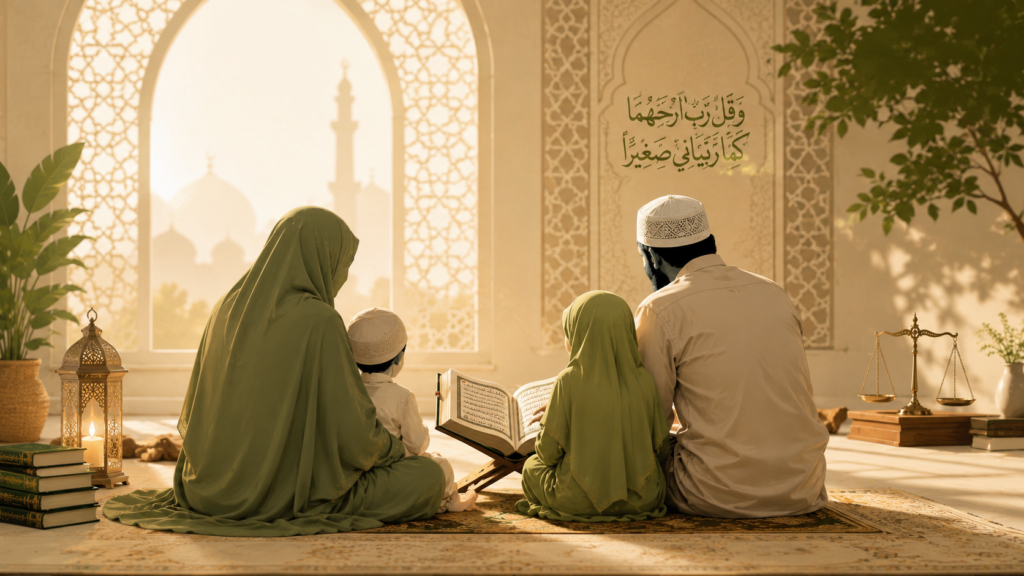
Islam is a complete way of life that carefully outlines the rights and responsibilities of every individual. While the rights of parents over their children are frequently discussed, Islam equally emphasizes that children have divinely ordained rights over their parents. These rights begin even before a child is born and continue throughout every stage of life.
Parenthood is not merely a privilege—it is a sacred trust (amānah) from Allah. Parents are entrusted with nurturing their children upon faith, righteousness, good character, and justice. On the Day of Judgment, every parent will be held accountable for how they fulfilled this responsibility.
The Messenger of Allah ﷺ said:
“Each of you is a shepherd, and each of you is responsible for his flock.”
Sahih al-Bukhari (7138); Sahih Muslim (1829)
This profound hadith reminds parents that raising children is both a responsibility and an act of worship.
1. The Right of Children to Righteous Parents
One of the first rights a child has is to be born into a home guided by faith and righteousness. Islam encourages Muslims to choose spouses based primarily on their piety, as righteous parents provide the best environment for raising righteous children.
Allah says in the Qur’an (what means):
“The good women are for the good men, and the good men are for the good women.”
Qur’an 24:26
The Prophet ﷺ said:
“A woman is married for four reasons: her wealth, her lineage, her beauty, and her religion. Choose the one with religion, and you will prosper.”
Sahih al-Bukhari (5090); Sahih Muslim (1466)
Likewise, the same principle applies when choosing a husband. Selecting a righteous spouse is among the earliest rights owed to future children.
2. The Right to Life and Protection
Long before the concept of modern human rights, Islam declared the sanctity of every child’s life.
Allah says in the Qur’an (what means):
“Do not kill your children for fear of poverty. We provide for them and for you. Surely killing them is a great sin.”
Qur’an 17:31
He also says:
“Do not kill your children because of poverty. We provide for you and for them.”
Qur’an 6:151
Every child has the God-given right to life, safety, and protection regardless of financial circumstances.
3. The Right to a Good Name
A child’s name forms part of their identity and dignity. Islam encourages parents to give their children beautiful and meaningful names.
The Prophet ﷺ said:
“Indeed, you will be called on the Day of Resurrection by your names and the names of your fathers, so give yourselves good names.”
Sunan Abi Dawud (4948)
4. The Right to Preserve Their Lineage
Every child has the right to know and maintain their true lineage.
Allah says in the Qur’an (what means):
“Call them by the names of their fathers; that is more just in the sight of Allah.”
Qur’an 33:5
Protecting a child’s lineage preserves identity, dignity, and family ties.
5. The Right to Love, Mercy, and Compassion
The Prophet Muhammad ﷺ was the finest example of affection toward children.
Anas ibn Malik (رضي الله عنه) said:
“I never saw anyone more merciful to children than the Messenger of Allah ﷺ.”
Sahih Muslim
When a man mentioned that he never kissed his own children, the Prophet ﷺ replied:
“Whoever does not show mercy will not be shown mercy.”
Sahih al-Bukhari; Sahih Muslim
Showing love and compassion is not a sign of weakness but a beautiful Sunnah.
6. The Right to Financial Support
Parents are obligated to provide for their children’s essential needs according to their ability, including food, clothing, shelter, healthcare, and education.
Allah says in the glorious Qur’an (what means):
“Let a man of wealth spend according to his wealth, and the one whose provision is restricted should spend from what Allah has given him.”
Qur’an 65:7
The Prophet ﷺ warned:
“It is sufficient sin for a person to neglect those whom he is responsible to support.”
Sunan Abi Dawud (1692)
Neglecting one’s dependents is a serious sin in Islam.
7. The Right to Islamic Education
The greatest gift parents can give their children is knowledge of Allah and His religion.
Allah says:
“O you who believe! Protect yourselves and your families from a Fire whose fuel is people and stones.”
Qur’an 66:6
Parents should nurture their children by teaching them:
- Tawḥīd (belief in Allah)
- Ṣalāh (prayer)
- The Qur’an
- Noble character (akhlaq)
- Halal and Haram
- Love for Allah and His Messenger ﷺ
The Prophet ﷺ said:
“Command your children to pray when they are seven years old…”
Sunan Abi Dawud (495)
8. The Right to Fair Treatment Among Siblings
Islam strongly condemns favoritism between children.
When Al-Nu’man ibn Bashir’s father gave him a gift, the Prophet ﷺ asked:
“Have you given all your children the same?”
When he replied no, the Prophet ﷺ instructed:
“Fear Allah and treat your children equally.”
Sahih al-Bukhari (2587); Sahih Muslim (1623)
Justice within the family nurtures love and prevents resentment.
9. The Right to Good Character
A parent’s responsibility extends beyond material care to cultivating noble character.
The Prophet ﷺ said:
“No father gives his child anything better than good manners.”
Jami’ at-Tirmidhi (1952)
Parents should instill honesty, humility, patience, kindness, courage, integrity, and respect through both teaching and personal example.
10. The Right to Protection from Harm
Islam forbids every form of harm against children.
The Prophet ﷺ established a timeless principle:
“There should be neither harming nor reciprocating harm.”
Sunan Ibn Majah (2340)
Parents must protect their children from abuse, neglect, exploitation, harmful influences, and anything that endangers their faith, health, or dignity.
11. The Right of Children to Inheritance
Inheritance is a right established by Allah, not a matter of personal preference.
Allah says:
“Allah instructs you concerning your children…”
Qur’an 4:11
No parent has the right to unjustly deprive an eligible child of the inheritance that Allah has prescribed.
12. Accountability Before Allah
Every parent will stand before Allah and answer for the trust placed in their care.
Allah says:
“Indeed, the hearing, the sight and the heart—about all those one will be questioned.”
Qur’an 17:36
The Prophet ﷺ also reminded us:
“Each of you is a shepherd, and each of you is responsible for his flock.”
Parents will be questioned about:
- Their children’s faith.
- Their Islamic and worldly education.
- Their moral upbringing.
- Their physical and emotional well-being.
- Justice among siblings.
- Every responsibility entrusted to them by Allah.
Conclusion
Islam establishes a balanced family structure founded upon justice, mercy, compassion, and accountability. Just as children are commanded to honor and obey their parents, parents are equally commanded to uphold the rights of their children.
Every child deserves love, protection, proper upbringing, education, fair treatment, financial care, and the opportunity to grow into a righteous servant of Allah. Fulfilling these rights is not merely a parental duty—it is an act of worship and one of the greatest investments for success in this life and the Hereafter.
May Allah ﷻ grant all parents wisdom, sincerity, patience, and compassion in fulfilling this sacred trust. May He bless our children with firm faith, noble character, beneficial knowledge, and righteous deeds, and make them a continuous source of reward (ṣadaqah jāriyah) for their parents in this world and the next. Amiin.