
Fasting, Islamic Principles
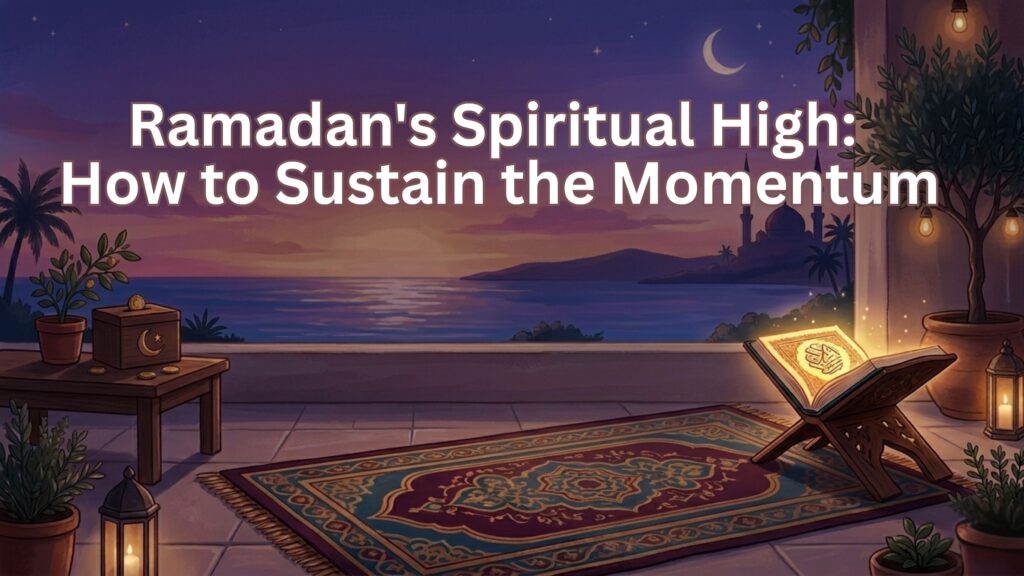
Ramadan’s Spiritual High: How to Sustain the Momentum
Apr
Ramadan’s Spiritual High: How to Sustain the Momentum
The holy month of Ramadan brings a unique spiritual elevation, softening hearts and purifying souls. As believers, we strive to make the most of this blessed time, but the real challenge lies in sustaining that momentum beyond the month’s end. How can we harness the spiritual boost and turn it into lasting change?
In this article, we’ll explore practical guidance and spiritual insights to help you maintain the dedication and good deeds cultivated during Ramadan, inspired by the Quran, Hadith, and wisdom of the Salaf. From cultivating a consistent prayer routine to incorporating acts of charity, we’ll dive into actionable tips to keep your spiritual growth on track.
Key Takeaways:
- Strategies for maintaining spiritual momentum post-Ramadan
- Practical tips for consistent prayer and Quran recitation
- Ways to incorporate acts of kindness and charity into daily life
1. Understanding the Significance of Continuity in Worship
Allah (SWT) commands in the Quran:
“And establish prayer and give zakah and obey the Messenger – that you may receive mercy.”
[An-Nur:56]
This verse emphasizes not only the performance of obligatory acts but the establishment of them consistently. Ramadan instills discipline and spiritual focus, but the essence of Iman (faith) is continuity. The Prophet Muhammad (SAW) warned:
“The most beloved deeds to Allah are those that are most consistent, even if they are small” [Al-Bukhari 6465, Sahih Muslim 783].
This wisdom encourages us to prioritize steady progress over short-lived extremes. Instead of trying to do it all, focus on small, sustainable habits that’ll keep you spiritually grounded long after Ramadan ends. Sustainability is key: ditch the all-or-nothing mindset and focus on small, manageable habits that’ll keep your spiritual growth on track. After Ramadan, it’s the steady wins that counts, by Allah’s Mercy.
2. Daily Habits for Sustaining Spiritual Growth
a) Regular Prayer and Voluntary Acts
While the five daily prayers are obligatory, Ramadan often inspires believers to perform additional nawafil (voluntary prayers). To maintain momentum, one should continue these acts at a sustainable level. The Prophet (SAW) said:
“Whoever prays twelve rak’ahs during the day and night, a house in Paradise will be built for him” [Musnad Ahmad 16542]
A practical approach is to select one or two extra voluntary prayers daily and gradually incorporate more as one’s consistency strengthens.
b) Qur’an Recitation and Reflection
Ramadan often brings an intensified focus on the Qur’an. Maintaining daily recitation, even a few verses, fosters spiritual nourishment. Allah (SWT) states:
“Indeed, this Qur’an guides to that which is most suitable and gives good tidings to the believers who do righteous deeds that they will have a great reward.”
[Al-Isra 17:9]
Make it a habit to recite the Qur’an everyday.
c) Continuous Remembrance (Dhikr) and Dua
Dhikr is the heartbeat of sustained spirituality. After Ramadan, maintaining frequent remembrance of Allah; morning and evening dhikr, or reciting phrases like “SubhaanaLLah,” “Alhamdulillah,” and “Allahu Akbar”, preserves the spiritual elevation. The Prophet (SAW) said: “Shall I not tell you of the best of your deeds, and the purest of them with your Master, and the highest of them in your ranks, and what is better for you than spending gold and silver, and better for you than meeting your enemy and striking their necks?” They said, “Yes, O Messenger of Allah!” He said: “Remembrance of Allah” [Al-Tirmidhi 3375].
3. Sustaining Charity and Good Character
Charity and moral conduct often reach their peak in Ramadan. To maintain momentum, the believer should integrate small acts of kindness into daily life: helping neighbors, feeding the needy, and displaying patience and humility in interactions. Allah (SWT) says:
“And whoever does righteous deeds, whether male or female, while being a believer – We will surely cause him to live a good life, and We will surely give them their reward [in the Hereafter] according to the best of what they used to do.”
[An-Nahl:97]
Practical Steps for Maintaining Dedication
- Set Realistic Goals: Identify manageable daily worship routines, like reading 5 verses of the Quran or performing 2 extra rak’ahs.
- Keep a Spiritual Journal: Track prayers, Quran recitation, and good deeds to stay accountable.
- Engage in Knowledge: Attend study circles, read Islamic books, or listen to beneficial lectures. Knowledge strengthens action.
- Maintain Fasting: Fasting beyond Ramadan—on Mondays, Thursdays, or the white days (13th, 14th, 15th of each lunar month)—reinforces self-discipline. The Prophet (SAW) said:
- Surround Yourself with the Righteous: Companionable influence encourages sustained worship and morality.
To summarize, Ramadan is a unique spiritual spring, but the true measure of faith is in what follows. Sustaining spiritual momentum requires consistency, realistic habits, and continuous self-reflection. Small, deliberate acts of worship, remembrance, charity, and moral conduct will ensure that the heart remains connected to Allah (SWT) throughout the year. As the Salaf reminded us, the goal is not fleeting intensity but lasting devotion. By applying these principles, the believer transforms Ramadan’s temporary elevation into lifelong spiritual growth. As Allah (SWT) tells us the purpose of Ramadan:
“Oh, you who believe! Fasting is prescribed to you as it was prescribed to those before you, [so] that you may learn piety and righteousness.”
[Al-Baqarah 2:183]
Let’s make the most of Ramadan’s spiritual high and turn it into a lasting transformation. Maintain your charity by donating to Rafeeqee Foundation, may Allah accept our Ramadan and help us to be steadfast.
“O you who have believed, persevere and endure, and remain steadfast, and fear Allah that you may succeed.”
[Al-Imran 3:200]